Our ALL NEW Glove Range is now available! Click here to browse a wide variety of gloves.

HAZCHEM Respirators & Respiratory Protection

Inhalation is one of the most common ways people can get exposed to hazardous substances in New Zealand. Respiratory protection is essential if your workers operate in an environment that may be contaminated with dust, smoke, mists, fumes or chemical vapours. Whether you’re looking for a breathing mask for light exposure or a class 1 respirator for more hazardous conditions, choosing the right solution is critical to safety.

Our extensive range of respiratory protection equipment includes disposable masks, half and full-face respirators, powered air respirators, Airline and escape respirators and more from leading international manufacturers.

Read more…

INDUSTRY STANDARD SAFETY SOLUTIONS

At pH7, we’re committed to providing industry-leading respiratory mask solutions. We represent 3 leading international manufacturers in New Zealand.

Shigematsu

Japan’s leading respiratory manufacturer operating since 1917. Their cutting-edge design and market-leading innovations have seen them grow worldwide, and we are proud to represent them exclusively in New Zealand. We stock a full range of reusable half and full-face respirators, filters and spare parts. In addition, we stock the Synchro range of compact breath-responsible PAPR breathing respirators from Shigematsu which has been hugely popular in New Zealand.

CleanAIR

CleanAIR® by Malina Safety offers a range of PAPR and Airline respiratory mask systems. Each system can be paired with a wide range of hoods, helmets, and masks or incorporated into chemical suits offering excellent flexibility. CleanAIR® is exclusive to pH7 in New Zealand. Browse our full range of respirators and respiratory protection products below:

As with all HAZCHEM PPE when it comes to choosing the correct respiratory protection it’s vital that you speak with the experts.  You will need to consider:

  • What am I protecting against (Particulates, Mists, Fumes or Gases)?
  • What is the concentration of these contaminants in the work area?
  • How long will you need to be wearing a respirator?
  • What size respirator will I need?
  • Will I need to be fit tested if so, do I have facial hair that could be a problem?
  • How do I what filters to use?
  • When do I change filters?

Spasciani

An Italian manufacturer of respirators, pH7 imports and distributes their range of escape respirators including filtering escape masks and hoods and the SK1203 Escape SCBA system which can be used in highly contaminated environments or when oxygen levels are low.

As with all HAZCHEM PPE when it comes to choosing the correct respiratory protection it’s vital that you speak with the experts. You will need to consider:

  • What am I protecting against (Particulates, Mists, Fumes or Gases)?
  • What is the concentration of these contaminants in the work area?
  • How long will you need to be wearing a respirator?
  • What size respirator will I need?
  • Will I need to be fit tested if so, do I have facial hair that could be a problem?
  • How do I know what filters to use?
  • When do I change filters?

If it all seems a bit confusing, don’t worry, our highly trained and experienced team can provide advice on the best solution for your needs to ensure your workers are protected and you can get on with your business.

To get started you can have a look at the products and videos we’ve listed here. You can also download our Respiratory Protection catalogues, which gives you an overview of some of the most common solutions.

To speak with one of the team about your Respiratory Protection needs give us a call on 0800 323 223 or use the chat function on the bottom right of our webpage and we will gladly help you find the best breathable face mask for you.

Read less

RESPIRATORY PROTECTION

Discover our comprehensive range of respiratory protection solutions designed to safeguard against airborne hazards in various industries. From disposable masks to full-face respirators, our products meet the highest safety standards to ensure maximum protection for workers exposed to harmful particles, gases, and vapors.

Explore our selection of respirators, filters, and accessories tailored to suit different workplace environments and hazards. Whether you need basic protection or advanced respiratory systems, we’ve got you covered with reliable solutions for your safety needs.

BROWSE ALL RESPIRATORY PROTECTION

Total Products: 202

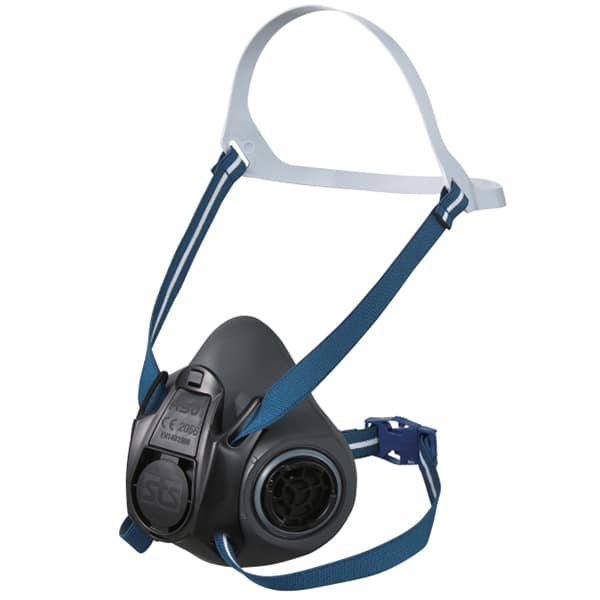
RS01 Thermoplastic Half Mask

SKU: STS4013

TS01 Half Mask

Options Available

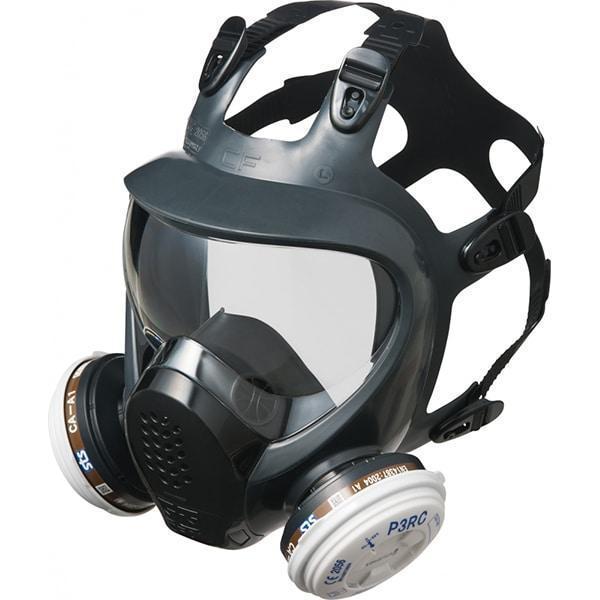
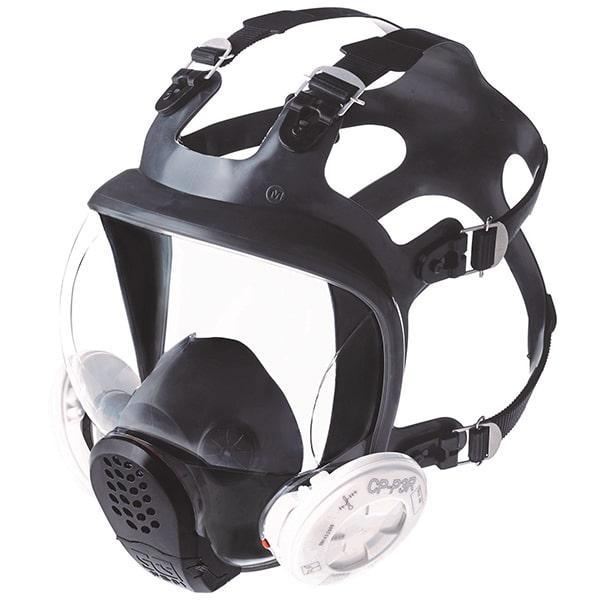
CF01 Full Face Mask

SKU: STS4010

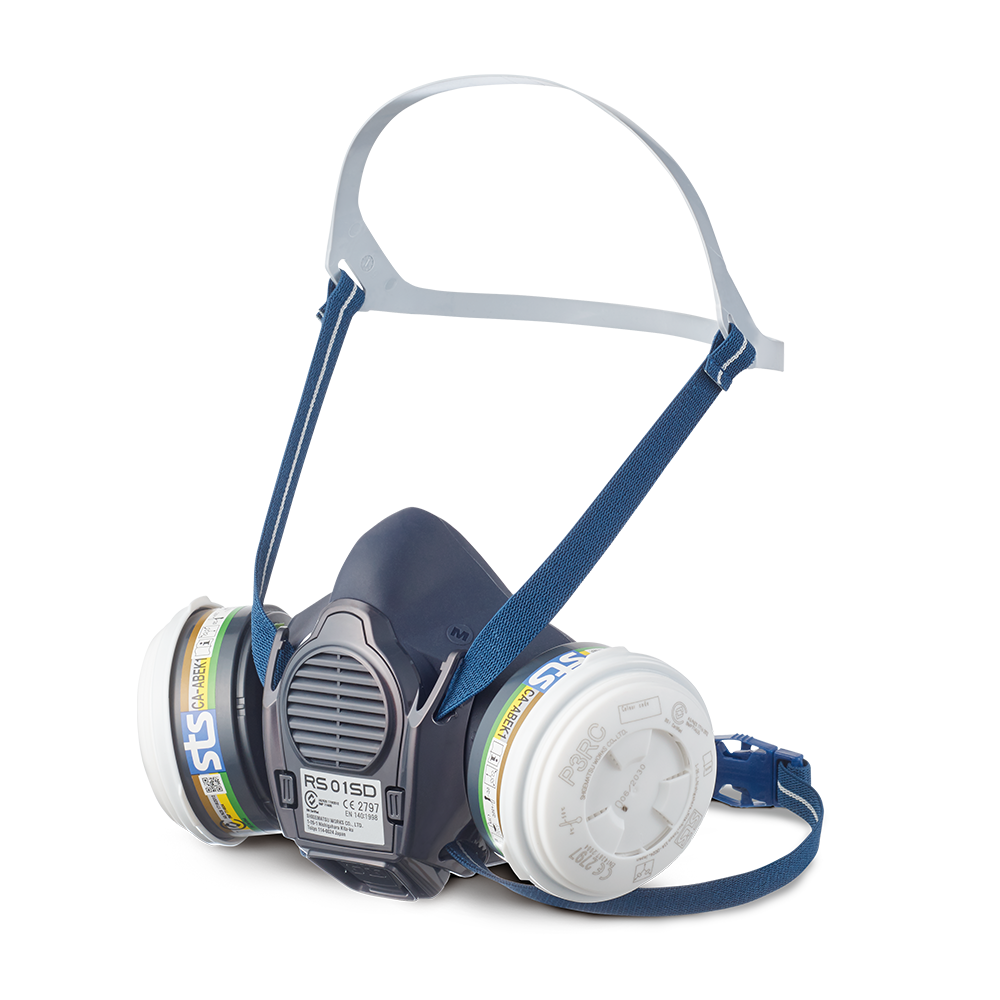
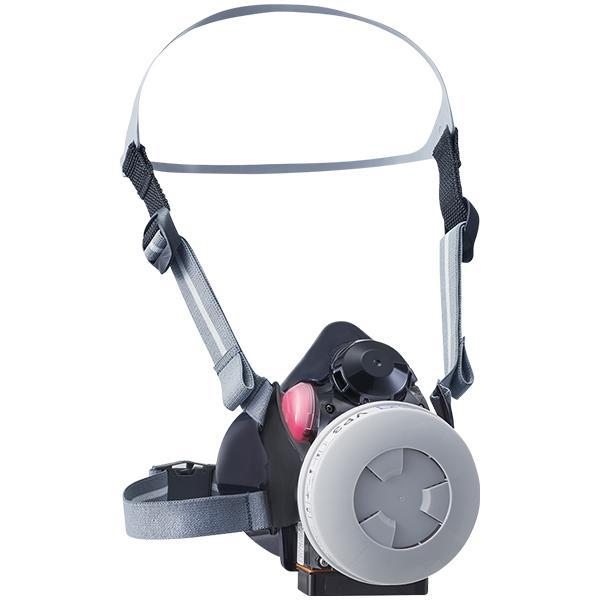
RS01SD – Premium Silicone Half Mask

Options Available

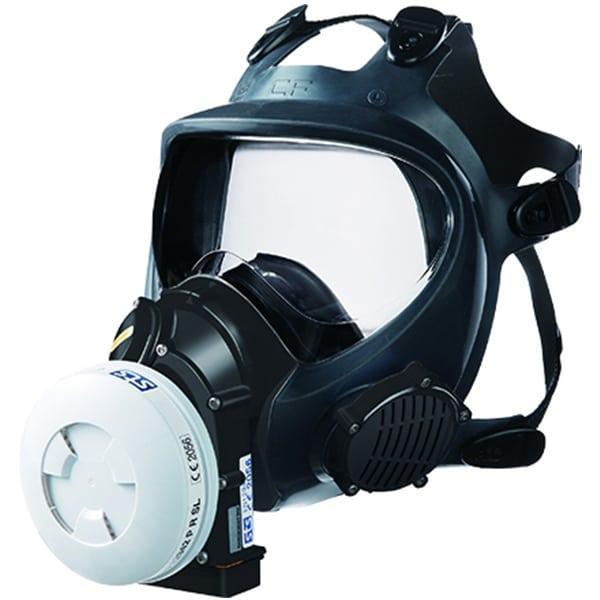
FS01 Full Face Mask

Options Available

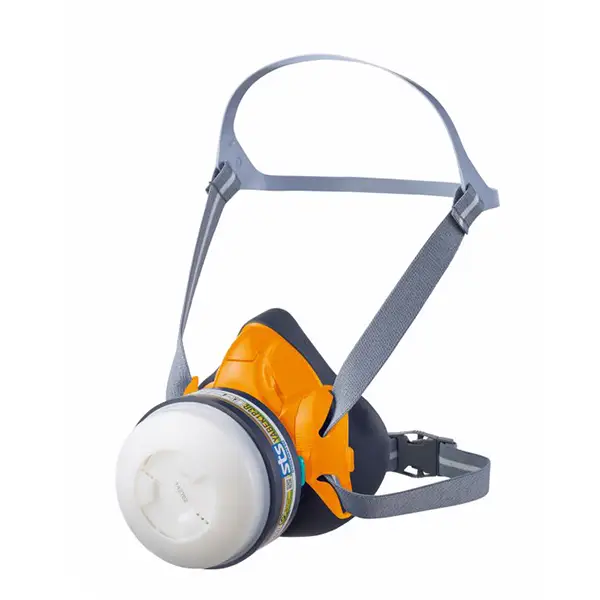
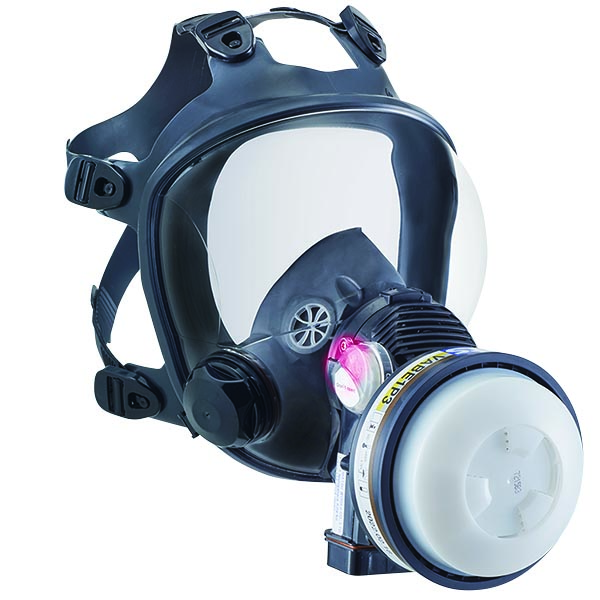
Breath Responsive Sync11VP3 PAPR Half Mask

SKU: STS40450

Breath Responsive Sync01VP3 PAPR

SKU: STS4040

Breath Responsive Sync09 PAPR

SKU: STS4047

FREQUENTLY ASKED QUESTIONS

What type of respirator do I need for chemical handling?

The correct respirator depends on the type of airborne hazard, whether vapours, gases, particulates, or a combination of both, and the concentration and duration of exposure.

Respiratory protection generally falls into two categories:

  1. Air-purifying respirators – these respirators filter contaminated air by having it pass through a filter before it is inhaled by the wearer. With air purifying respirators it is vital that you understand the type of contaminates and concentration level in the environment so that you choose the correct filter type and class to provide the protection you need.  Air-purifying respirators are only appropriate in environments where there is sufficient oxygen present in the atmosphere, and the type of contaminants present are known and not immediately dangerous to life or health (IDLH). Air-purifying respirators are either:
    • Negative pressure – this is when the wearer used their lung power to suck contaminated air through a filter(s). All negative pressure respirators MUST be properly fit tested to ensure an adequate face seal is achieved.
    • Positive pressure – these Powered Air Purifying respiratory (PAPR) use a battery and fan unit to suck contaminated air through a filter(s) and result in air around the breathing zone being slightly higher pressure than the surrounding environment. PAPR units can be paired with a range of headtops, including loose hoods, helmets, half and full-face masks. IN some cases, fit testing is not required.

  2. Supplied air respirators – these respirators provide clean air wither from outside the contaminated environment or via a tank or cylinder to the wearer. They can be worn in high hazard environments including confined spaces, oxygen deficient environments and are suitable for use with contaminants that are IDLH. Supplied air respirators fall int two categories:
    • Airline systems which connect the wearer to a clean air source via and airline.
    • Self-Contained Breathing Apparatus (SCBA) which is wear the user carriers their air supply with them in a cylinder.

Selecting the right respirator for your requirements is important and pH7’s technical staff are here to help you make the right choice.  To make an informed decision you will need to know:

  1. What contaminates are in your environment?
  2. What is the level of concentration in the atmosphere?
  3. Who long are you likely to be exposed to those contaminants?
  4. What is the working environment like (i.e. confirmed space, inside tanks, ships hold, buildings etc?)
  5. Are you connecting to over other PPE such as chemical suits?
How should I clean, store, and maintain my respirator after use?

Proper cleaning, storage, and maintenance preserve seal integrity, filtration performance, and hygiene. Follow the respirator manufacturer’s instructions and AS/NZS 1715:2009 (Selection, Use & Maintenance). We’ve also written a practical routine:

After each use (half-face & full-face)

  • Pre-clean: Remove filters/cartridges (do not wash them). Wipe off gross contamination with a damp disposable wipe.
  • Clean: Wash facepiece, head harness, and exhalation valve cover in warm water (~30–40 °C) with a mild neutral detergent. Use a soft brush on crevices; avoid solvents, chlorine bleach, and abrasive pads.
  • Rinse: Thorough potable-water rinse to remove detergent residues (residues can irritate skin and degrade rubber).
  • Disinfect (when required): Apply a quaternary ammonium or 70% isopropyl wipe/spray approved by the respirator maker. Observe contact time.
  • Dry: Air-dry in a clean area out of direct sunlight and heat. Do not tumble-dry or use heaters.
  • Inspect: Check face seal/lip, valves, valve seats, lens (full-face), buckles, and harness for cracks, warping, stickiness, or deformation. Replace damaged parts immediately.

PAPR (Powered Air-Purifying Respirator) specifics

  • Do not immerse blowers, batteries, or hoses unless the manufacturer explicitly allows it. Wipe exterior with approved wipes.
  • Hoods/visors: Clean per manufacturer guidance; many allow mild detergent wipe then disinfectant wipe.
  • Filters: Never wash. Replace when flow alarms trigger, when loading causes reduced airflow, when odour/breakthrough is detected, or per your change-out schedule.
  • Charging/storage: Store batteries charged to the recommended level; avoid prolonged full discharge.

Storage (all respirators)

  • Store fully dry components in a sealed, clean container or bag, away from dust, chemicals, oils, UV, and heat (ideal is cool, dry, <30 °C).
  • Keep facepieces uncrushed (don’t stack heavy items on them).
  • Segregate clean vs. used units and filters/cartridges vs. facepieces to prevent cross-contamination.
  • Label kits with user name, last clean date, and next service due for traceability.

Filter & cartridge handling

  • Refit only when the facepiece is completely dry.
  • Cap or reseal cartridges when not in use to prevent passive adsorption.
  • Follow your site-specific change-out schedule (contaminant, concentration, humidity, duration) per AS/NZS 1715 and the manufacturer’s data.

Inspection checklist (quick run-through)

  • Facepiece: no tears, tackiness, or hardening
  • Valves: move freely; seats clean and undistorted
  • Lens (full-face): clear, scratch-free, no crazing
  • Harness/straps: elastic and intact
  • Connections/threads: secure, undamaged
  • PAPR: hose integrity, blower operation, airflow test/indicator passes; battery holds charge

Documentation & training

  • Maintain a cleaning/maintenance log (who, when, what).
  • Ensure users are trained and fit-tested; re-train after model changes or facial changes (weight change, facial hair, dental work).
  • Replace consumables proactively: valves, head straps, lens covers, and face seals per service intervals.
What is the difference between a half-face and full-face respirator?

The key difference lies in the coverage, protection level, and application.

  • Half-face respirators cover only the nose and mouth, protecting against inhalation of gases, vapours, and particulates when fitted with the correct filter or cartridge. They are suitable for low to moderate exposure levels and must be used in conjunction with separate eye protection (e.g. chemical goggles or face shields). Half-face masks typically meet AS/NZS 1716:2012 and are used in painting, decanting, or general chemical handling tasks.
  • Full-face respirators provide complete face coverage, sealing around the eyes, nose, and mouth to protect both the respiratory tract and eyes from airborne hazards, splashes, and chemical vapours. They offer a higher Assigned Protection Factor (APF) than half masks and are ideal for high-risk or prolonged chemical exposure, hazardous vapour environments, or emergency response applications.

Full-face respirators also reduce the need for separate eye protection and are compatible with a wide range of gas/vapour and particulate filters, including ABEK1P3.

Both types must be fit-tested to ensure an effective seal and selected based on workplace exposure levels, task duration, and chemical type in accordance with WorkSafe NZ and HSWA 2015 respiratory protection requirements.

How often should filters or cartridges be replaced?

The service life of respirator filters and cartridges depends on several factors, including the type of contaminant, airborne concentration, humidity, breathing rate, and duration of exposure. Because these variables differ between worksites, there is no single replacement interval that suits all applications.

As a general guideline:

  • Gas and vapour cartridges (e.g. ABEK1) should be replaced as soon as odours, tastes, or irritation become noticeable, or when the manufacturer’s maximum use time or change-out schedule is reached (typically 6 months from opening). Once sorbent materials become saturated, breakthrough can occur without visible warning.
  • Particulate filters (P1, P2, P3) should be replaced when breathing resistance increases, or if the filter becomes damaged, wet, or visibly contaminated with dust or aerosols.
  • For PAPR systems, follow the manufacturer’s filter-change indicators or airflow monitoring alerts when using particulate filters.  For gas and vapour filters these should be changed when odours, tastes or irritation is detected.  Some PAPR systems will allow you to set filter change reminder alarms.

We recommend following AS/NZS 1715:2009 – Selection, Use and Maintenance of Respiratory Protective Equipment and the specific filter manufacturer’s data to establish a documented change-out schedule. This ensures compliance with WorkSafe NZ requirements and maintains consistent respiratory protection performance.

Our team can assist with developing site-specific replacement protocols and advise on suitable filters, cartridges, and maintenance procedures for your respirator system.

Do respirators work with other PPE like coveralls or goggles?

Yes, all our respirators are designed for compatibility with other personal protective equipment (PPE) such as chemical coveralls, gloves, and hearing protection, ensuring full-body protection without compromising fit or performance.

  • Half-face respirators are ideal when used with safety goggles or face shields, allowing clear visibility while maintaining a secure seal around the nose and mouth. The mask’s low-profile design minimises interference with other PPE and ensures easy integration under chemical hoods or visors.
  • Full-face respirators provide integrated eye, face, and respiratory protection in one unit, reducing the need for separate goggles and minimising potential gaps between PPE items.
  • Powered Air Purifying Respirators (PAPRs), such as CleanAIR and Shigematsu systems, can be paired with protective hoods, helmets, or chemical suits for complete coverage in high-hazard or confined-space environments.

When combining respirators with other PPE, it’s critical to ensure that no component disrupts the respirator’s face seal or airflow path. All our respirators comply with AS/NZS 1716:2012 for performance or the relevant European standards for respiratory protection.

Our team can help you select and fit-test respirator models that integrate seamlessly with your site’s PPE ensemble – supporting WorkSafe NZ compliance and all-day wearer comfort.

WANT TO HEAR ABOUT OUR
LATEST UPDATES?

SIGN UP TO OUR MAILING LIST