Is your site HAZCHEM compliant? Find out in 20 minutes with our free assessment tool!
Full body chemical exposure requires an immediate and sustained decontamination response. Where eye wash and face wash equipment addresses localised splash injuries, an emergency shower station provides the high-volume water coverage needed to flush hazardous substances from clothing, skin, and hair across the entire body. In chemical exposure incidents, the speed of activation and the adequacy of the initial rinse are the two factors most likely to determine the severity of the outcome.
pH7 supplies a comprehensive range of emergency shower NZ workplaces rely on across industrial, laboratory, agricultural, and commercial environments.
Read more…
How Emergency Showers Work
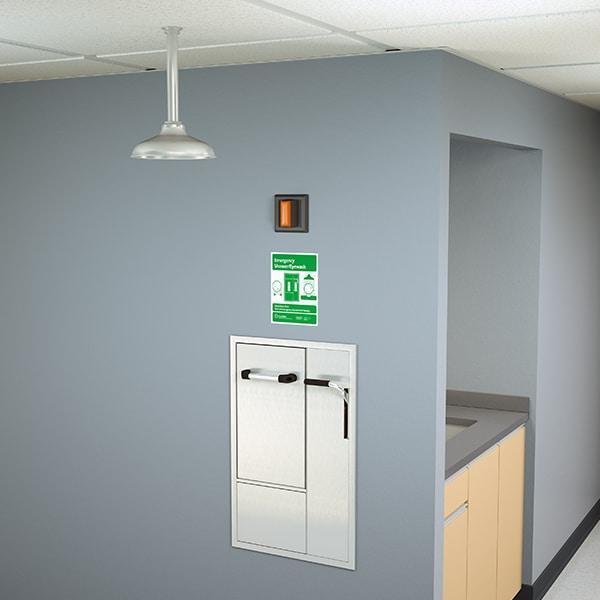
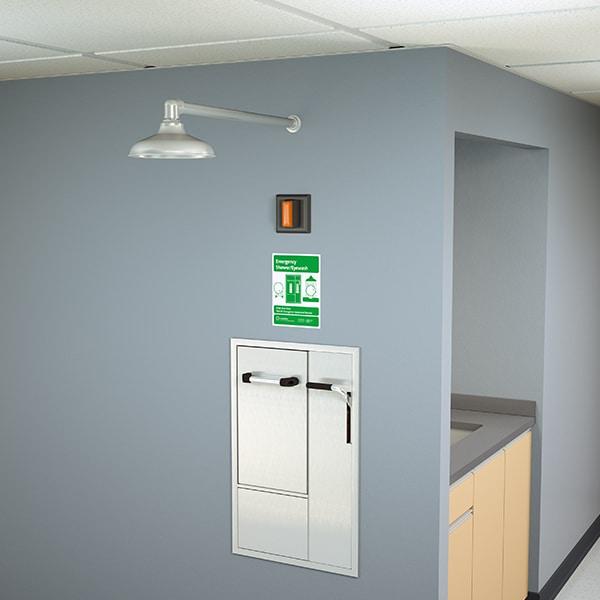
An emergency shower delivers a continuous high-volume flow of water from an overhead emergency shower head, designed to drench the full body simultaneously when activated. Units are typically activated by a pull rod or push plate requiring a single motion with minimal force, allowing activation even when a worker’s hands are contaminated or mobility is compromised.
Once activated, flow should be sustained without the user holding the activation mechanism. AS/NZS 4775 requires a minimum flow rate of 75.7 litres per minute from the emergency shower head, maintained for a minimum of 15 minutes to achieve adequate decontamination. The standard also requires tepid water supply between 16 and 38 degrees Celsius, as water outside this range can cause hypothermia during prolonged exposure or discourage a casualty from remaining under the shower for the required duration.
For emergency safety shower units that also incorporate integrated eye wash or face wash functionality, allowing a single installation point to address both full body and localised decontamination requirements simultaneously, check out our Safety Stations.
Read less
Home / Products / HAZCHEM Emergency Response Equipment / Emergency Showers & Eyewashes
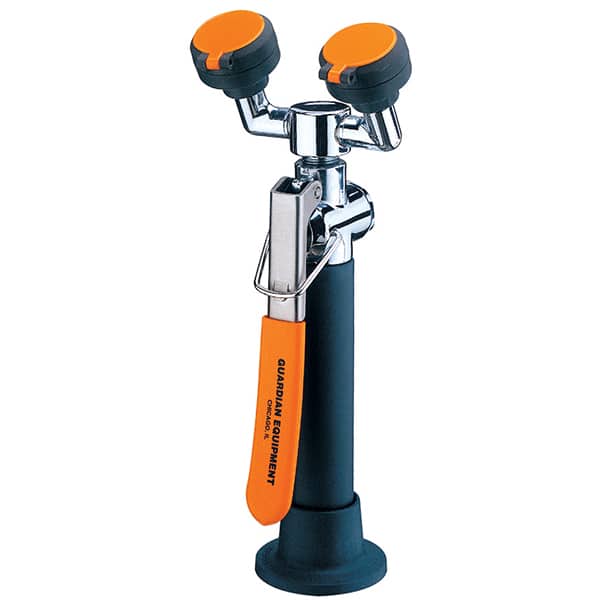
Emergency Showers and Eyewashes for rapid response to chemical exposure. Designed for safety and accessibility, these fixtures provide immediate relief in emergency situations, ensuring workplace safety and compliance. Browse now to equip your facility with essential emergency response equipment.
In New Zealand, emergency showers and eyewash stations should comply with AS 4775:2007 or ANSI Z 358.1 which outlines performance requirements for flow rate, activation time, water pattern, temperature, and accessibility.
Key compliance points include:
Our range of emergency showers and eyewash units are built, tested, and certified to meet the requirements of AS 4775, ensuring workplaces meet their obligations under the Health and Safety at Work (Hazardous Substances) Regulations 2017.
pH7 offers a complete range of plumbed-in and self-contained emergency decontamination systems suitable for laboratories, manufacturing facilities, chemical plants, and outdoor sites.
Our range includes:
Each unit is designed for tepid water delivery, hands-free operation, and corrosion resistance, ensuring full compliance with AS 4775.
Emergency decontamination equipment must be installed in locations that allow immediate, unobstructed access. Under AS 4775 / ANSI Z358.1, emergency showers and eyewashes must:
Outdoor units should be UV-stabilised, frost-protected, and equipped with insulated or heated lines if exposed to cold climates. pH7 provides site layout support to help workplaces meet all installation requirements.
Under AS 4775, emergency showers and eyewashes must undergo:
For portable eyewash units, the water must be changed and sanitised according to manufacturer instructions, usually every three to six months.
pH7 offers annual compliance testing services, inspection documentation, and replacement parts, ensuring your emergency equipment remains audit-ready and fully functional.
The correct unit depends on the hazard type, chemical properties, and site layout. When selecting equipment, assess:
WANT TO HEAR ABOUT OUR
LATEST UPDATES?
SIGN UP TO OUR MAILING LIST